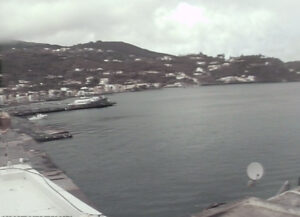
Die äolischen Inseln

Klicken Sie auf den Namen der Insel
für weitere Informationen
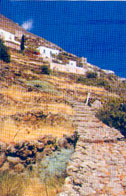
Questa immagine ha l'attributo alt vuoto; il nome del file è Alicudi-1.jpgALICUDI
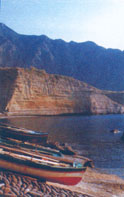
Es ist die westlichste Insel des Archipels. Der alte Name Ericusa ist auf die reiche Heidevegetation zurückzuführen, von der die Insel bedeckt ist. Das Heidekraut ist Teil der Geschichte und des Lebens der Inselbewohner, die es immer benutzt haben, um Hütten und mit der Wurzel Rohröfen zu bedecken. Alicudi ist ein runder Kegel, der mit dem Filo dell’Arpa-Relief gipfelt und eine Fläche von 5,2 km² hat. Die Einwohner, Alicudari genannt, sind ungefähr 140 Jahre alt und leben im einzigen bewohnten Zentrum (Alicudi Porto), in der Fischerei und in der kleinen Landwirtschaft. Die Insel ist vulkanischen Ursprungs und besteht größtenteils aus dem erloschenen Vulkan Montagnola, der vor etwa 150.000 Jahren nach überschwänglichen und explosiven Ausbrüchen geboren wurde
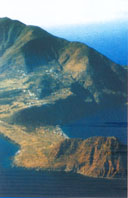
Questa immagine ha l'attributo alt vuoto; il nome del file è Filicudi.jpgFILICUDI
Früher als Phoenicusa (reich an Farnen) bezeichnet, ist es zusammen mit Alicudi geologisch die älteste der Äolischen Inseln. Es hat eine Fläche von 9,5 km² und sein höchster Punkt, die Fossa delle Felci, liegt bei 773 Metern. Die Einwohner, Filicudari genannt, sind ungefähr 250, verteilt auf die drei wichtigsten bewohnten Zentren: Filicudi porto, Pecorini a mare und Valle Chiesa. Die Konformation der Insel ist leicht oval und erstreckt sich nach Südosten im Vorgebirge von Capo Graziano, einer kleinen Halbinsel, die durch einen Landstreifen mit dem Hauptteil von Filicudi verbunden ist. Die Insel besteht aus den Produkten von sechs Vulkanzentren. Das älteste muss sich im Meer nahe der Küste von Fili di Sciacca befunden haben.
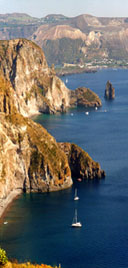
Questa immagine ha l'attributo alt vuoto; il nome del file è quattrocchi_sp.jpgLIPARI
Es ist die größte Insel des Äolischen Archipels. Es hat eine Fläche von 37,6 Quadratkilometern und ist 24 Seemeilen von der sizilianischen Küste entfernt. Die Einwohner, Liparesi oder Liparoti genannt, sind etwa 9000 Einwohner und bevölkern die Weiler der Insel: Canneto, Acquacalda, Quattropani und Pianoconte. Mit Ausnahme von Salina sind alle anderen Inseln administrativ von Lipari abhängig. Wie alle äolischen Archipele hat Lipari vulkanischen Ursprung. Der älteste Teil der Insel ist der westliche, in dem vor 160.000 bis 134.000 Jahren 12 Vulkanschichten identifiziert wurden, darunter die Timponi. Auf diese Phase intensiver Eruptionen folgte eine lange Pause der Vulkanaktivität. In der zweiten Periode, vor ungefähr 100.000 Jahren, wurde der Vulkan Monte S. Angelo geschaffen. Die Vulkane der dritten Periode (vor 40.000 und 8.000 Jahren) brachen Bimsstein aus und bildeten eine Reihe von Kuppeln, darunter Monte Guardia und Monte Giardina. Nach einer langen Pause setzte sich die Eruptionsaktivität im nordöstlichen Teil mit dem Start enormer Mengen Bimsstein, aus dem der Monte Pelato bestand, und mit der Emission des Obsidianflusses des Rocche Rosse (VII) Jahrhunderts n. Chr. Wieder ein. C. Schon in historischer Zeit kam es zu Bimssteinausbrüchen, die die ältesten archäologischen Ebenen im Bezirk Diana und auf der Akropolis des Schlosses mit einer Schicht sehr feinen Staubes bedeckten.
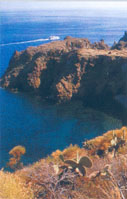
Questa immagine ha l'attributo alt vuoto; il nome del file è Panarea-1.jpgPANAREA
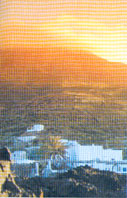
Panarea, früher Hycesia genannt, ist die kleinste Insel des Äolischen Archipels. Es hat eine Fläche von nur 3,4 Quadratkilometern und ist 11,5 Meilen von Lipari entfernt. Die 280 Einwohner, Panarioti genannt, leben in drei Bezirken: Ditella, S. Pietro und Drauto. Panarea wird von den nahe gelegenen Inseln Basiluzzo, Dattilo, Bottaro, Spinazzola und den Felsen von Lisca Bianca, Lisca Nera, Panarelli und Formiche eingerahmt. Gelehrte glauben, dass Panarea und die Felsen und Inseln, die es umgeben, die Überreste eines alten Unterwasservulkans sind, der in den Zwischeneiszeiten teilweise vom Wasser überflutet wurde. In dem gegenwärtig entstandenen Teil ist es möglich, einen einzelnen Vulkan zu erkennen, an dessen Flanken zahlreiche sekundäre Eruptionszentren implantiert wurden.
Questa immagine ha l'attributo alt vuoto; il nome del file è salina-1.jpgSALINA
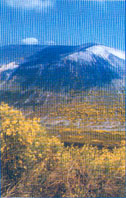
Nach Lipari ist es die zweitgrößte Insel des Archipels: etwa 27 Quadratkilometer groß. Es ist die höchste der 7 Inseln mit den Bergen „Fossa delle Felci“ und „Monte dei Porri“, ebenfalls lang erloschenen Vulkanen. Aus der Gegenwart dieser beiden Gipfel stammt der alte Name Didyme, was Zwillinge bedeutet. Der heutige Name leitet sich vom Vorhandensein eines kleinen Sees ab, aus dem Salz gewonnen wurde, das dann zur Erhaltung von Kapern und Fischen verwendet wurde. Es ist die zweitgrößte Insel des Archipels mit etwa 2.300 Einwohnern. Es ist in drei autonome Gemeinden unterteilt: S. Marina, Malfa und Leni. Die Weiler heißen: Lingua, Rinella, Val Di Chiesa, Pollara und Torricella. Auf dem Gebiet von Salina gibt es Spuren von sechs Vulkanen.
Questa immagine ha l'attributo alt vuoto; il nome del file è Stromboli-1.jpgSTROMBOLI
Stromboli, die am weitesten entfernte und östlichste der Äolischen Inseln, liegt etwa 35 km von Lipari entfernt. Die Alten nannten es Strongyle, die Rotunde. Es hat eine Fläche von 12,6 km². mit etwa 420 Einwohnern, genannt Strombolani. Der aktive Vulkan liegt etwa 920 Meter über dem Meeresspiegel und der Meeresboden ist sehr tief (1200 m). Die Insel ist ein Vulkan, der aus dem Meer hervorgeht. Der entstandene Teil, der seit mindestens 2000 Jahren eine anhaltende Aktivität aufweist, wurde hauptsächlich während zweier Aktivitätszyklen gebildet. Ein alter Zyklus, bestehend aus Eruptionen von festem Material und Lavaströmen, die den gesamten östlichen Teil der Insel bildeten, und ein neuerer Zyklus, der hauptsächlich aus Lavaströmen bestand, die die gesamte westliche Hälfte der Insel bildeten.
Questa immagine ha l'attributo alt vuoto; il nome del file è vulcano.jpgVULCANO
Die alte Hiera (heilig) ist nach Angaben der griechischen Heimat des Feuergottes Hephaistos die südlichste Insel des Äolischen Archipels und liegt Sizilien am nächsten. Es ist vom nahe gelegenen Lipari durch einen etwa 1,6 km breiten Kanal getrennt. Seine Oberfläche beträgt 21 km². Aus geologischer Sicht besteht die Insel aus 4 Vulkanen: Lentia, Vulcano Piano, Fossa di Vulcano und Vulcanello. Der einzige, der noch als aktiv gilt, ist der Vulcano della Fossa. Die vulkanische Aktivität dieser Insel war seit der Antike den Griechen und Römern bekannt, die davon stark beeindruckt waren.
We use cookies to personalise content and ads, to provide social media features and to analyse our traffic. We also share information about your use of our site with our social media, advertising and analytics partners.
Cookies settings
Accept
Privacy & Cookie policy
Privacy & Cookies policy
Cookie name Active

Privacy Policy

What information do we collect?

We collect information from you when you register on our site or place an order. When ordering or registering on our site, as appropriate, you may be asked to enter your: name, e-mail address or mailing address.

What do we use your information for?

Any of the information we collect from you may be used in one of the following ways: To personalize your experience (your information helps us to better respond to your individual needs) To improve our website (we continually strive to improve our website offerings based on the information and feedback we receive from you) To improve customer service (your information helps us to more effectively respond to your customer service requests and support needs) To process transactions Your information, whether public or private, will not be sold, exchanged, transferred, or given to any other company for any reason whatsoever, without your consent, other than for the express purpose of delivering the purchased product or service requested. To administer a contest, promotion, survey or other site feature To send periodic emails The email address you provide for order processing, will only be used to send you information and updates pertaining to your order.

How do we protect your information?

We implement a variety of security measures to maintain the safety of your personal information when you place an order or enter, submit, or access your personal information. We offer the use of a secure server. All supplied sensitive/credit information is transmitted via Secure Socket Layer (SSL) technology and then encrypted into our Payment gateway providers database only to be accessible by those authorized with special access rights to such systems, and are required to?keep the information confidential. After a transaction, your private information (credit cards, social security numbers, financials, etc.) will not be kept on file for more than 60 days.

Do we use cookies?

Yes (Cookies are small files that a site or its service provider transfers to your computers hard drive through your Web browser (if you allow) that enables the sites or service providers systems to recognize your browser and capture and remember certain information We use cookies to help us remember and process the items in your shopping cart, understand and save your preferences for future visits, keep track of advertisements and compile aggregate data about site traffic and site interaction so that we can offer better site experiences and tools in the future. We may contract with third-party service providers to assist us in better understanding our site visitors. These service providers are not permitted to use the information collected on our behalf except to help us conduct and improve our business. If you prefer, you can choose to have your computer warn you each time a cookie is being sent, or you can choose to turn off all cookies via your browser settings. Like most websites, if you turn your cookies off, some of our services may not function properly. However, you can still place orders by contacting customer service. Google Analytics We use Google Analytics on our sites for anonymous reporting of site usage and for advertising on the site. If you would like to opt-out of Google Analytics monitoring your behaviour on our sites please use this link (https://tools.google.com/dlpage/gaoptout/)

Do we disclose any information to outside parties?

We do not sell, trade, or otherwise transfer to outside parties your personally identifiable information. This does not include trusted third parties who assist us in operating our website, conducting our business, or servicing you, so long as those parties agree to keep this information confidential. We may also release your information when we believe release is appropriate to comply with the law, enforce our site policies, or protect ours or others rights, property, or safety. However, non-personally identifiable visitor information may be provided to other parties for marketing, advertising, or other uses.

Registration

The minimum information we need to register you is your name, email address and a password. We will ask you more questions for different services, including sales promotions. Unless we say otherwise, you have to answer all the registration questions. We may also ask some other, voluntary questions during registration for certain services (for example, professional networks) so we can gain a clearer understanding of who you are. This also allows us to personalise services for you. To assist us in our marketing, in addition to the data that you provide to us if you register, we may also obtain data from trusted third parties to help us understand what you might be interested in. This ‘profiling’ information is produced from a variety of sources, including publicly available data (such as the electoral roll) or from sources such as surveys and polls where you have given your permission for your data to be shared. You can choose not to have such data shared with the Guardian from these sources by logging into your account and changing the settings in the privacy section. After you have registered, and with your permission, we may send you emails we think may interest you. Newsletters may be personalised based on what you have been reading on theguardian.com. At any time you can decide not to receive these emails and will be able to ‘unsubscribe’. Logging in using social networking credentials If you log-in to our sites using a Facebook log-in, you are granting permission to Facebook to share your user details with us. This will include your name, email address, date of birth and location which will then be used to form a Guardian identity. You can also use your picture from Facebook as part of your profile. This will also allow us and Facebook to share your, networks, user ID and any other information you choose to share according to your Facebook account settings. If you remove the Guardian app from your Facebook settings, we will no longer have access to this information. If you log-in to our sites using a Google log-in, you grant permission to Google to share your user details with us. This will include your name, email address, date of birth, sex and location which we will then use to form a Guardian identity. You may use your picture from Google as part of your profile. This also allows us to share your networks, user ID and any other information you choose to share according to your Google account settings. If you remove the Guardian from your Google settings, we will no longer have access to this information. If you log-in to our sites using a twitter log-in, we receive your avatar (the small picture that appears next to your tweets) and twitter username.

Children’s Online Privacy Protection Act Compliance

We are in compliance with the requirements of COPPA (Childrens Online Privacy Protection Act), we do not collect any information from anyone under 13 years of age. Our website, products and services are all directed to people who are at least 13 years old or older.

Updating your personal information

We offer a ‘My details’ page (also known as Dashboard), where you can update your personal information at any time, and change your marketing preferences. You can get to this page from most pages on the site – simply click on the ‘My details’ link at the top of the screen when you are signed in.

Online Privacy Policy Only

This online privacy policy applies only to information collected through our website and not to information collected offline.

Your Consent

By using our site, you consent to our privacy policy.

Changes to our Privacy Policy

If we decide to change our privacy policy, we will post those changes on this page.
Save settings
Cookies settings